Roots and Branches
Read, Cut
& Film:
Turning
a Story into
a Film
Read, Cut & Film is a method for developing the imagination and artistic abilities of children aged 8–12 through the creative game of "playing animation director", in which the child completes the full production cycle of an animated film within a limited time. The method consists of a five-step sequence (reading, discussion, paper cutting, frame-by-frame stop-motion filming, and presentation as a premiere screening) and is designed to allow a child to produce a finished work within one to two academic hours.
Read, Cut & Film operates both with pre-designed kits prepared by professional illustrators and animators (drawing largely on classical narratives understood as "sources of moral imagination" and accompanied by step-by-step filming guides) and in a more open-ended format, in which the child, working with a tutor, invents and makes their own characters and then "brings them to life" using simple digital tools.
The Purpose of this Page
Here we set out to answer a number of foundational questions: which traditions inform the Read, Cut & Film method, which texts its authors regard as programmatic, which contemporary European practices Liberi Ludi takes as its points of reference, and why.
Roots
Roots are the theoretical foundations that took shape across the twentieth century: play theory, constructionism, narrative psychology, the pedagogy of the Hundred Languages of Children, approaches to screen culture, and psychosocial support through creative practice.
The method draws on six roots:
Play as cultural activity
Johan Huizinga, Jean Piaget, Lev Vygotsky, Friedrich Fröbel. Play is understood not as a break from learning, but as a form of the child's cultural development.
Knowledge through action and the creation of material objects
John Dewey, Seymour Papert, Mitchel Resnick, Loris Malaguzzi and the Reggio Emilia approach. The child learns to turn the imagined into the real: an idea becomes visible, tangible and embodied through the appearance of a paper character, a storyboard, the filming itself, and the premiere.
Narrative and identity
Jerome Bruner, Vladimir Propp, Sheldon Cashdan. Story is treated as a form of making sense of experience: the child does not simply retell a plot but rather interprets it, incorporating it into their own inner world.
The Hundred Languages of Children and the Reggio Emilia approach
Loris Malaguzzi and the Reggio tradition. The method proceeds from the recognition that a child can express meaning not only in words, but also through image, movement, material, composition, gesture, and shared action.
Psychosocial support through creative practice
IASC, IFRC PS Centre, Cathy Malchiodi, Lucia Capacchione. Creative practice is understood not as therapy, but as a supportive activity: it reduces isolation, restores the child's sense of participation, and, through authorship, restores a sense of agency over the events of one's own life.
Reducing screen time as a pedagogical choice
Jonathan Haidt, Jean Twenge, Sherry Turkle, the World Health Organization, the WHO Regional Office for Europe, Better Internet for Kids. Within the method, the smartphone (or any digital device) is used as a filming tool, not as a habitat; the focus shifts away from the device-driven generation of process and outcome, and towards attention, creative judgement, and live interaction.
Branches
Branches are the living European and international practices with which Liberi Ludi develops its method in dialogue: The Ark in Dublin, Cinéma, cent ans de jeunesse in France, the Soviet school of cut-out animation, the Reggio Emilia approach in work with migrant children, and other points of reference that matter to us.
The novelty of Read, Cut & Film does not lie in the technical invention of a new children's animation kit. Its innovation lies in the combination of pedagogical principles with contemporary approaches to a child's creative self-realisation.
Drawing on this theoretical foundation, we offer a ready-to-use solution for teachers of the arts, after-school clubs and study groups, and camps with arts programmes, wherever there are mixed groups, including groups with migrant children, made up of children who have recently entered a new linguistic and cultural environment.
Part I. Roots: Theoretical Foundations
Root 1. Play as Cultural Activity
Connection to practice. The basic unit of the method is the group of children itself (a direct reference to Vygotsky). Play is not a "way of livening up the lesson", but a form of learning. The focus on ages 8–12 is not a marketing choice, but a psychologically grounded "transitional window" between early childhood and adolescence.
At Liberi Ludi (Latin for “children’s games”), we proceed from the premise that a child between the ages of 8 and 12, in creating their own work, is not taking a break from learning, but performing a meaningful cultural act.
We arrived at this conclusion both through our own observations of children in pilot groups and, of course, through the work of the educational theorists from whom we set out in formulating the principles of our method for the integration of migrant children Read, Cut & Film.
Johan Huizinga, the Dutch cultural historian, set out what has since become a canonical position in Homo Ludens (1938):
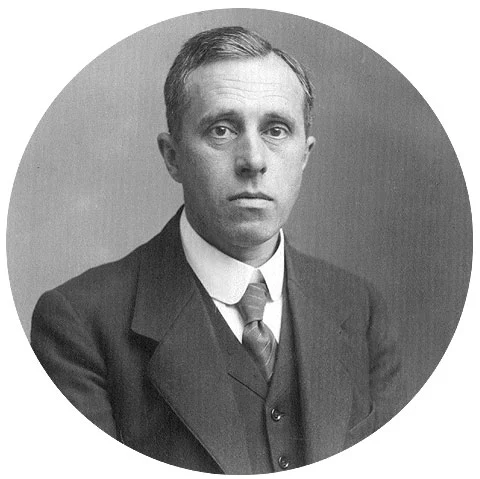
—Johan Huizinga
—Johan Huizinga
Huizinga underlines the cultural significance of play: a child is not simply "having fun until they grow up". Their play is already culture itself, not a preparation for it.
Jean Piaget, the Swiss developmental psychologist, in La formation du symbole chez l'enfant (1945; English edition: Play, Dreams and Imitation in Childhood, 1951), set out the proposition on which all later play-based pedagogy rests: play is not the child's respite from cognitive work, but one of its principal forms.
In Piaget's model, the child moves from the concrete operational stage (ages 7–11) towards the formal operational stage (from around age 11). The Read, Cut & Film method is likewise designed to support children of this age through that transition, drawing out both their creative and their analytical capacities.
We work from the assumption that selecting and reading a story, completing a storyboard, and making physical characters give the child a concrete operational footing, while interpreting a plot and discussing visual choices already call for formal operational moves.
Piaget also helps to explain why Read, Cut & Film is not designed for children younger than eight, even though a younger child already grasps the substance of stories, can work with paper and modelling materials, and has a perfectly clear idea of what animation is.
Animation, like cinema as a whole, is a synthetic art form, and engaging with it requires not only enthusiasm but also a certain degree of cognitive maturation. To perceive a character as a subject, a sequence of actions as a chain of cause and effect, and a plot as a narrative, the child has to perform a number of specific cognitive operations.
In Piaget's model, these emerge precisely at the 7–11 stage: identity conservation (the hedgehog remains the same hedgehog from frame to frame, even when seen from different angles), recognition of event types (set-up, conflict, resolution), seriation (arranging frames into the right order), the beginnings of logical sequencing (the difference between cause and effect), and decentration (the ability to take another's point of view, whether the character's or the viewer's).
Before this stage, a child works splendidly with paper, folding, cutting and weaving in the classical Fröbelian tradition, but cannot yet hold together a narrative in which a character performs not merely sequential, but motivated actions.
Read, Cut & Film begins precisely at the point where a child becomes capable not only of perceiving a story, but of interpreting and constructing one of their own.
It should be noted, however, that Piaget spoke only of cognitive operations, not of the creative act itself. In describing a child's creative work (inventing a visual solution, translating an abstract plot into image, choosing what each scene is for), we have drawn on other authors.
In Lev Vygotsky, the artistic act appears as an autonomous function of creative imagination (see below); in Papert (Root 2), as a constructionist cycle of "material object ↔ idea"; in Bruner (Root 3), as a narrative mode of thought, in which interpreting a story does not reduce to formal deduction.
The child does not analyse a plot logically, but makes it their own, not so much entering the story as using the story to explain themselves: their feelings, thoughts, and actions.
Piaget's stages, then, are for us a necessary foundation on which the creative act is built, while the description of that act itself we owe to other major theorists.
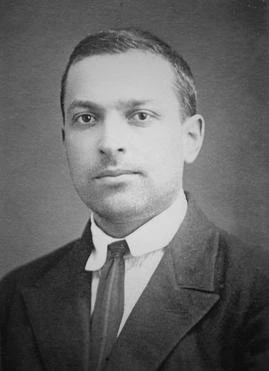
Lev Vygotsky, the Soviet psychologist, in Imagination and Creativity in Childhood (1930) and in his later work, introduced into pedagogical thought a number of concepts, of which one of the most central is the very understanding of creativity as a universal rather than an elitist human capacity:
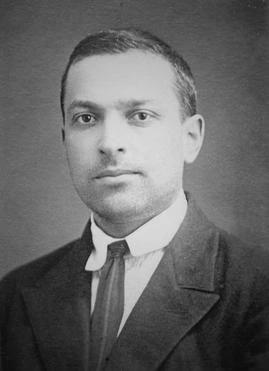
(L. S. Vygotsky, Imagination and Creativity in Childhood, 1930, Chapter 1; English trans. F. Smolucha, Journal of Russian and East European Psychology, vol. 42, no. 1 (2004), pp. 7–97.)
—Lev Vygotsky
(L. S. Vygotsky, Imagination and Creativity in Childhood, 1930, Chapter 1; English trans. F. Smolucha, Journal of Russian and East European Psychology, vol. 42, no. 1 (2004), pp. 7–97.)
—Lev Vygotsky
Several principal lines may be distinguished within this conception.
The Zone of Proximal Development (ZPD). A child, in cooperation with an adult or a more experienced peer, is able to do what they cannot yet do alone. Vygotsky himself puts it this way:
(L. S. Vygotsky, Mind in Society: The Development of Higher Psychological Processes, ed. and trans. M. Cole et al., Harvard University Press, 1978, p. 87. Translating a passage from Vygotsky's writings of 1933–1934.)
—Lev Vygotsky
(L. S. Vygotsky, Mind in Society: The Development of Higher Psychological Processes, ed. and trans. M. Cole et al., Harvard University Press, 1978, p. 87. Translating a passage from Vygotsky's writings of 1933–1934.)
—Lev Vygotsky
Following this principle, Read, Cut & Film treats as optimal a small group with a clearly identifiable lead: two children of the same age but with different levels of preparation, three or four children of different ages, or one-to-one work between a child and an adult tutor.
This is a literal practical implementation of the ZPD through a significant peer or adult. In mixed-age groups, the older or more experienced child generally becomes the natural cultural mediator.
The cycle of cultural development: mediation, interiorisation, authorship.For Vygotsky, development is a movement from external action shared with others towards inner, individual action. He formulates this canonically as the general law of cultural development:
(L. S. Vygotsky, Mind in Society, ed. and trans. M. Cole et al., Harvard University Press, 1978, p. 57; from the chapter "Interaction Between Learning and Development", drawing on Vygotsky's "The History of the Development of Higher Mental Functions", 1931.)
—Lev Vygotsky
(L. S. Vygotsky, Mind in Society, ed. and trans. M. Cole et al., Harvard University Press, 1978, p. 57; from the chapter "Interaction Between Learning and Development", drawing on Vygotsky's "The History of the Development of Higher Mental Functions", 1931.)
—Lev Vygotsky
The Read, Cut & Film method was developed precisely within this model. Discussion of the story, completion of the storyboard, and joint work on a character function as external cultural means through which the child takes on a new cultural framework.
Imagination, anticipation of the final result, and the invention of one's own visual solution are already acts of individual creativity: the means and forms of self-expression, once acquired, become the instruments of authorial work.
The final step, the premiere screening at which the finished work is defended before an audience, returns the individual into the social space, and it is at this moment that the child becomes an author, an artist in the eyes of others.
The idea of the exteriorisation of interiorised means is a later development of Vygotsky's system, found in Alexei Leontiev and especially in Jerome Bruner, who showed that an acquired narrative becomes a form of the child's own address to the other (see Root 3). The Read, Cut & Film inherits precisely this expanded, Brunerian reading of Vygotsky.
For a child living through migration from one cultural environment into another, this act of returning into the social in a new role, that of author, is particularly important: the interpretation of a classical story works as a mediating sign between their "own" world (family culture, the culture of the country of origin) and the "new" world (the host country), while the final premiere becomes an act of public presentation of what has been mastered, in which the child becomes, for the first time, an author, a significant figure within the new cultural environment, and not merely its guest.
Speaking of this methodological root, it is impossible not to mention Friedrich Fröbel, the inventor of the kindergarten and of the idea of the Gifts (structured materials for play-based education, nineteenth century). Fröbel gives paper-cutting and work with paper a proper pedagogical history: they have a two-hundred-year lineage and did not arise out of nowhere as "children's handicraft" in the contemporary arts-and-crafts sense.
In Fröbel's system, paper was chosen not as a convenient and inexpensive material, but as the bearer of certain qualities important for the formation of the person: pliability and resistance at once, work with a visible and tangible result, the demand for precision.
The aim of working with paper is not yet another craft product, but development through the work itself. It builds motor coordination, a sense of symmetry, an understanding of form, and the habit of seeing a piece of work through to the end.
The Read, Cut & Film uses these same principles: "paper as part of the pedagogical environment", not "paper as raw material for craft".
And although the method addresses the next age group (middle grade), for older children working with paper functions, in a certain sense, as a familiar anchor within a new activity, the making of an animated film: "ah, this is paper-cutting, I've done it many times, this is easy".
As a result, it becomes a symbol of their own progress: the move from what had become familiar "paper craft" to a character that comes to life.
Root 2. Knowledge through Action (constructionism in an analogue form)
Connection to practice. The "Cut + Create" stage is not a simplification, but a "bridge to reality" (material thinking), the constructionist passage from the imagined to the tangible. The "Show + Share" stage, in the form of a premiere screening, is at once a Deweyan shaping of experience into artistic expression and a Reggio-style documentation of process.
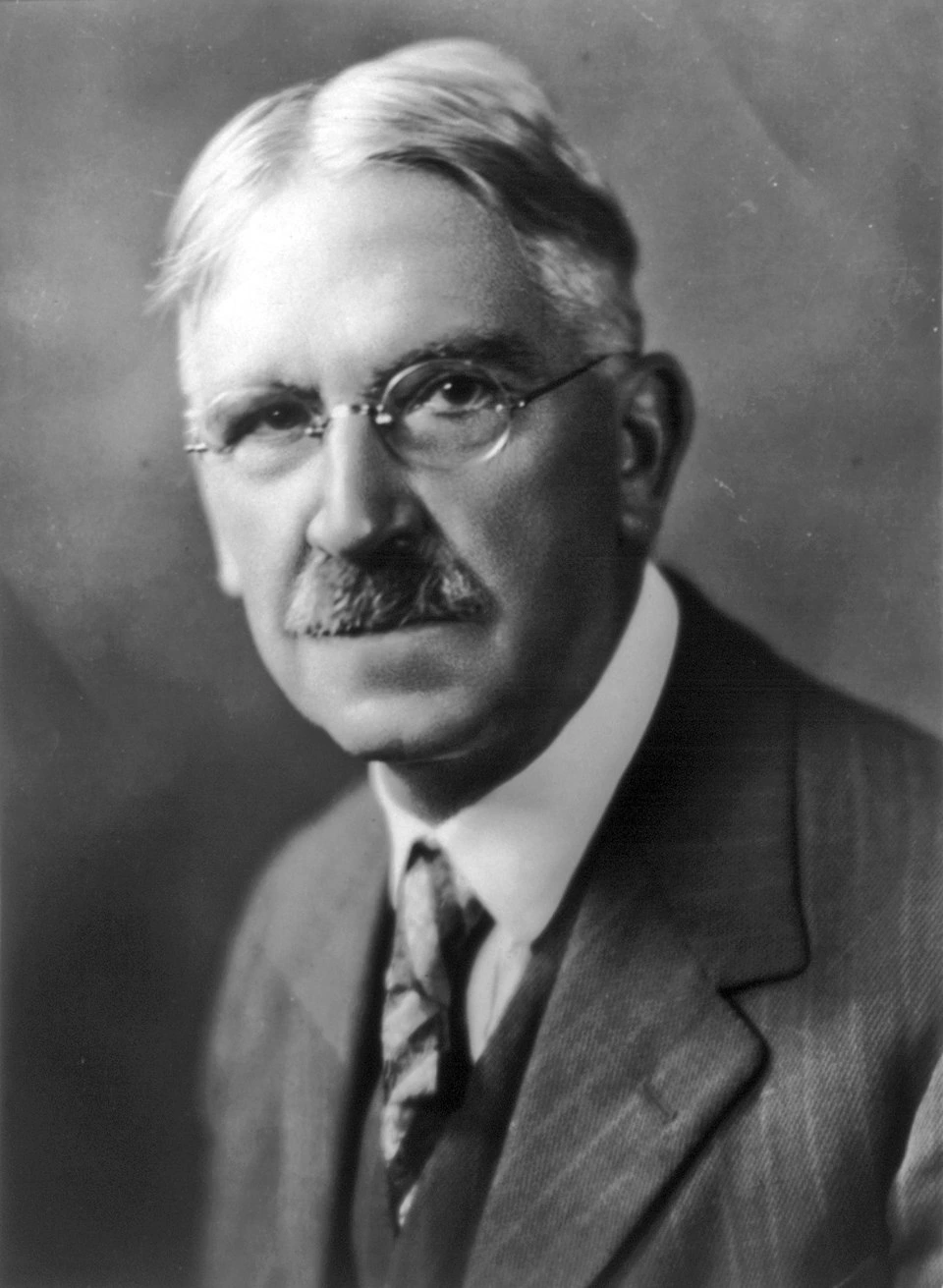
John Dewey
, the American philosopher of education, in
Art as Experience (1934) and Experience and Education (1938)
, set out two ideas that became foundational for experiential learning.
The first: experience becomes artistic experience when it is reflected upon and given form, rather than remaining an immediate, unshaped reaction (Art as Experience). Dewey's distinction between artistic expression and the
mere discharge directly
underwrites the closing stage of the
Read, Cut & Film
, "Show + Share": without the presentation of the finished work and the discussion that follows, the experience of filming remains at the level of an unformed emotional response.
The second comes from his earlier My Pedagogic Creed (1897):
(John Dewey, My Pedagogic Creed, 1897, Article II.)
—John Dewey
(John Dewey, My Pedagogic Creed, 1897, Article II.)
—John Dewey
This formula sits at the foundation of all modern non-formal pedagogy: the child does not learn "for later", but encounters both the world and themselves here and now.
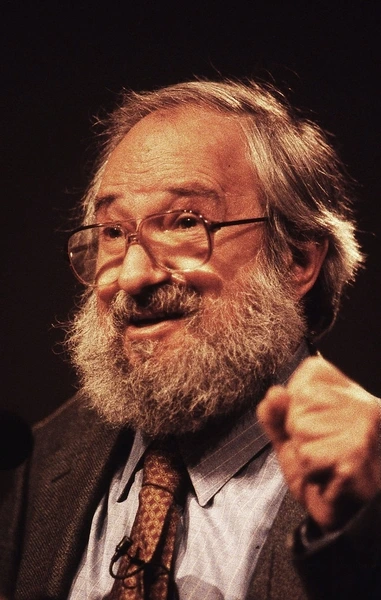
Seymour Papert
, a student of Piaget and co-founder of the MIT Media Lab, developed the concept of constructionism in
Mindstorms: Children, Computers, and Powerful Ideas (1980)
, and articulated it most directly in his 1991 essay
"Situating Constructionism"
:
( Seymour Papert , "Situating Constructionism" , in S. Papert and I. Harel (eds.), Constructionism , Ablex, 1991, ch. 1.)
—Seymour Papert
(Seymour Papert , "Situating Constructionism" , in S. Papert and I. Harel (eds.), Constructionism , Ablex, 1991, ch. 1.)
—Seymour Papert
The
Read, Cut & Film
inherits precisely this idea, thinking through making, and returns it to its first, pre-digital form. Where Papert's tool was
LOGO
programming language, Liberi Ludi returns to “paper and scissors", so that the resulting object is not only visible but tangible. This is a deliberate methodological choice: the method first anchors the practice of producing a finished work in analogue forms first, as a foundation on which the child's potential can later unfold through digital tools. In contemporary literature this approach is sometimes described as
analogue constructionism
, or
constructionism without devices
: learning grounded in material, non-digital forms of work.
Mitchel Resnick
, director of the Lifelong Kindergarten group at the MIT Media Lab and a student of Papert, in
Lifelong Kindergarten: Cultivating Creativity through Projects, Passion, Peers, and Play (MIT Press, 2017)
put forward the
4P framework
: Projects, Passion, Peers, Play. The
Read, Cut & Film
fits this scheme cleanly: a project (an animated film), peers (group work or a pair of same-age children), passion (the choice of story and its interpretation), play (the method as a whole). Resnick described creative projects primarily within digital environments such as Scratch and ScratchJr, but the
4P framework
itself sets out broader principles of creative learning, which is why it has become one of the most widely adopted contemporary models of creative learning.
Loris Malaguzzi and the Reggio Emilia approach.
The
"Hundred Languages of Children"
approach (Malaguzzi's poem, published in C. Edwards, L. Gandini and G. Forman, eds.,
The Hundred Languages of Children: The Reggio Emilia Approach to Early Childhood Education
, 1993) provides the theoretical grounding for the proposition that drawing, paper-cutting and animating a character are equal parts of a child's creative "language", alongside spoken expression. The
Read, Cut & Film
draws directly on two key Reggio concepts:
Languages of expression,
for the "Cut + Create" stage. The child translates their understanding of a story not into words, but into a visual, tactile and kinetic language. For a migrant child, this lowers the linguistic barrier to participation: they are not required to speak Italian, French or German fluently in order to be a full participant in the project.
Pedagogical documentation,
for the "Show + Share" stage. Within the Reggio Emilia approach, documentation (panels, portfolios, video) is not an addition to play, but an essential part of it: the recording of the process makes the result of the child's work (their imagination, thought, creative judgement) visible, and at the same time consolidates them in a new role, that of author, both for themselves and other children, and for parents and tutors.
Read, Cut & Film
carries this principle into the format of a premiere screening, with posters, tickets and a discussion afterwards.
The Reggio Emilia approach was originally developed for early childhood (ages 3–6:
asilo nido
and
scuola dell'infanzia
). The transfer of these principles to the 8–12 age range calls for an important caveat: the method adapts the making of meaning across different forms of expression (
multimodal meaning-making
), with the greater narrative complexity available to older children. (For more on the adaptation of Reggio principles for migrant children, see the "Branches" section below.)
Root 3. Narrative and Identity
Connection to practice.
The use of classical narratives in
Read, Cut & Film
is a methodological choice rooted in the ideas of narrative psychology, according to which human beings make sense of themselves and the world around them through stories. Authorship here arises not in inventing a plot from scratch, but in interpretation: the child draws their own meaning out of a story and translates it into visual form, reinterpreting it and making it "their own". Through this process, a personal relationship to the story takes shape and the story is brought into contact with the child's own experience.
This root connects the method to the wider mission of
Liberi Ludi
: the formation of identity through culture.
Jerome Bruner
, the American psychologist, in
Actual Minds, Possible Worlds
(Harvard University Press, 1986) and
Acts of Meaning
(Harvard University Press, 1990), developed the idea of the narrative self: the understanding of identity as something formed through stories. For Bruner, human beings make sense of their own lives not as a set of facts, but as a narrative that ties together experience, memory and interpretation. We become who we are through the stories we tell about our lives:
(Jerome Bruner, Acts of Meaning, Harvard University Press, 1990, ch. IV.)
— Jerome Bruner
(Jerome Bruner, Acts of Meaning, Harvard University Press, 1990, ch. IV.)
— Jerome Bruner
Bruner draws a distinction between two modes of thought: the paradigmatic, or logico-scientific, which works through categories and propositions, and the narrative, which works through stories, the explanation of motives, and interpretation. Modern schooling, Bruner argues, is heavily skewed towards the paradigmatic mode, while the narrative mode remains undervalued, even though it is precisely the latter that is responsible for the formation of identity.
Read, Cut & Film
concentrates on this narrative mode: the child does not merely retell a plot, but appropriates it through interpretation, the choice of emphasis, and the making of a visual solution. Bruner's work has had a major influence on contemporary pedagogical thinking about how children form their identity, their sense of belonging (their connection to others), and their understanding of the cultural environment in which they live.
Vladimir Propp
, the folklorist, in
Morphology of the Folktale
(1928; English edition, University of Texas Press, 1968), identified thirty-one functions whose sequence makes up the canonical structure of the wonder tale. Among them: absentation, interdiction, violation, lack, the hero’s departure, testing by the donor, struggle, victory, return.. The completion of a storyboard in
Read, Cut & Film
, as the building of a child's capacity to tell a story, to identify a theme and unfold it, separating the essential from the secondary, draws in many respects on Propp's functional structure, adapted for children aged 8–12. Propp's approach turns work with a folktale into a clear analytical task: select several key narrative functions and ask which visual means can bring out their importance. In this sense the method can be regarded as a structural tool grounded in Proppian narrative morphology, helping children produce their own adaptations of literary stories.
Sheldon Cashdan
, an American clinical psychologist and Professor Emeritus at the University of Massachusetts Amherst, in
The Witch Must Die: How Fairy Tales Shape Our Lives
(Basic Books, 1999), shows that fairy tales work on the child not only through plot, but above all through experience. The fairy tale creates a safe symbolic form within which the child can encounter difficult themes (the fear of separation from those they love, the opacity of the adult world, the experience of loss, anger, the sense of weakness, greed, the fear of evil) not as forbidden subjects, but as something that can be lived through, made sense of and discussed. The fairy-tale "witch", in this logic, stands as the symbol of an inner conflict, and the victory over the "witch" as its symbolic resolution.
Read, Cut & Film
proceeds from the same principle of "experience as the resolution of inner conflict", and the setting in which a safe symbolic form is established here is the "playing at animation". When a child chooses which story they want to film, or which character should be given more screen time, they are, often without realising it, choosing the inner conflict that matters most to them at that moment. In this case the tutor should not present the child with a ready-made psychological reading, but help create the conditions for the child's own psychological work, mainly by helping with the question of "how to film", rather than "what to film". At the same time, the method takes care not to turn this symbolic work from play into a therapeutic session (see Root 5 on this fundamental distinction).
Classical Narratives. Connection to Practice
Liberi Ludi
consciously works with the fairy tales, myths and archetypal stories that have become part of the classical canon. This is not "nostalgia", nor an expression of cultural conservatism. Classical narratives endure within culture because they function as stable symbolic forms. They allow the child to live through and make their own the experience of conflict and choice, of fear and the struggle against injustice, while much of contemporary entertainment is built above all on the short-term capture of attention, rather than as a structure for a story that calls for further inner work and interpretation.
The theoretical grounding of this approach is set out in more detail in the section
"Sources of Moral Imagination for the Middle Grade Child".
The principal authors and concepts on which the method draws are listed below.
Joseph Campbell
,
The Hero with a Thousand Faces
(Pantheon, 1949). Campbell put forward an archetypal model of the "hero's journey", in which the mythological narratives of different cultures are read as variations on a shared structure of trial, transformation and return. In pedagogical and cultural settings, this model is widely used as a practical framework for analysing plot and developing narrative.
Martha Nussbaum
,
Cultivating Humanity
(Harvard University Press, 1997);
Not for Profit: Why Democracy Needs the Humanities
(Princeton University Press, 2010). Nussbaum links narrative imagination, the capacity to imagine another person's experience through story, with the development of empathy, moral imagination and democratic citizenship. Within this account, literature and storytelling become not only an aesthetic experience, but also a way of engaging with civic and humanistic values.
Maxine Greene
,
Releasing the Imagination
(Jossey-Bass, 1995). Greene treats imagination as a necessary condition both for education and for the formation of intellectual freedom and personal agency. Art and artistic narrative, in her view, allow the child to step outside the given frameworks for perceiving the world.
Alasdair MacIntyre
,
After Virtue
(University of Notre Dame Press, 1981). MacIntyre links a person's moral development with participation in the narrative practices and traditions of a community. Virtues, for MacIntyre, are not acquired through abstract rules, but through participation in stories, in social roles, and in shared forms of communal life.
Root 4. The Hundred Languages of Children and the Reggio Emilia Approach
The
Reggio Emilia approach
has already been mentioned in Root 2 as part of the constructionist line. The approach takes in both "learning through making" and "narrative as the formation of identity", and at the same time the pedagogy of work with migrant children.
The approach was developed by the Italian educator
Loris Malaguzzi
over the course of the 1960s to the 1990s. His poem
"The Hundred Languages of Children"
became its pedagogical manifesto:
"The child is made of one hundred. The child has a hundred languages, a hundred hands, a hundred thoughts, a hundred ways of thinking, of playing, of speaking. […] [School and culture] tell the child that the hundred is not there. The child says: No way. The hundred is there."
(
Loris Malaguzzi
,
"No way. The hundred is there"
, authorised English translation by Lella Gandini, in C. Edwards, L. Gandini and G. Forman (eds.),
The Hundred Languages of Children: The Reggio Emilia Approach to Early Childhood Education
, Ablex / Praeger, 1993; 3rd ed., Praeger, 2012.)
This image overturns the pedagogical frame and breaks the hierarchy between the verbal and the non-verbal. The child is not someone "lagging behind until they have learned", but a full participant. For a migrant child who has not yet mastered the language of the host country, this means that one of the hundred languages is, for the moment, out of reach, but the child can express themselves in the others they already possess. One of those is the universal language of art. Paper, scissors and the movement of a character within the frame can therefore stand on equal footing with verbal language as means of expression.
From the same tradition comes the concept of the
image of the competent child
(
l'immagine del bambino competente
). The core of this concept is that the child does not begin from a position of missing skills or knowledge: they have quite enough of both to express themselves, to inquire and to interpret. The educator's task is not to fill the child up, but to create the conditions in which the child's capacities can unfold. In work with migrant children, this stands as an alternative between two models: the model of
innate deficiency
(the refugee child as traumatised or behind) and the model of
innate sufficiency
(the child has their own experience, imagination and right to cultural expression).
The third concept is
pedagogical documentation
(
pedagogical documentation
). Photographs, video, the words of children, their finished work: all of these make the child's capacities visible to the child themselves, to parents, to other children, to the educator. In
Read, Cut & Film
, the
"Show + Share"
stage carries this Reggio principle through in the format of a premiere screening.
For more on the implementation of Reggio Emilia approaches in work with migrant children in Italy and Sweden, see the "Branches" section below.
Root 5. Psychosocial Support through Creative Practice
Connection to practice.
Lowering the threshold of inclusion through play; reducing the sense of isolation within the group; restoring a sense of agency and authorship through the reassembly of a story; raising the child's standing within the group after the premiere screening.
In their work with children in migration,
Liberi Ludi
puts into practice the principle of
psychosocial support through creative practice
, the formulation adopted within the humanitarian sector (UNHCR, Save the Children, IFRC PS Centre, IASC).
The core sources for this root are:
Cathy Malchiodi
,
Handbook of Art Therapy
, 2nd ed., Guilford Press, 2011. The contemporary academic standard, which draws a clear line between clinical art therapy and supportive creative practices.
Read, Cut & Film
sits firmly on the second side of that line.
Inter-Agency Standing Committee (IASC)
,
Guidelines on Mental Health and Psychosocial Support in Emergency Settings
, 2007. The base document for the humanitarian sector, which describes the layered structure of support: from basic services and security (layer 1), through community and family supports (layer 2) and focused, non-specialised supports (layer 3), to specialised clinical services (layer 4).
Read, Cut & Film
operates at layers 2–3 (community and family supports + focused, non-specialised supports), in the space of
public creative and cultural intervention
(
non-specialist creative-cultural intervention
).
IFRC Reference Centre for Psychosocial Support
, an international body operating under the International Federation of Red Cross and Red Crescent Societies, whose guidance treats creativity, play and group activity as significant instruments of support for children in conditions of migration, war and social disorientation.
Lucia Capacchione
,
The Creative Journal for Children
, Shambhala, 1989/2007. Capacchione looked at the keeping of a drawn journal with elements of collage as a way for the child to make sense of feelings, emotions and the experience of daily life. Her conclusion was that creative practice can be a supporting and ordering activity even outside therapy.
Root 6. Reducing Screen Time for the Child (screen-free / screen-reducing)
Connection to practice.
In
Read, Cut & Film
, the smartphone is used only as a tool, a camera and, where needed, an "editing desk", not as an environment. This is the formula
device as tool, not as environment
. Observation of pilot groups has shown that children with a strongly established screen habit need noticeably more effort to take on analogue activities (paper cutting, frame-by-frame filming) than children without a pronounced attachment to screens. Within an hour of an absorbing shared "playing director", however, a child usually returns to baseline settings of attention and interaction with peers.
Jonathan Haidt
,
The Anxious Generation: How the Great Rewiring of Childhood Is Causing an Epidemic of Mental Illness
, Penguin Press, 2024. Haidt has become one of the most prominent public voices in favour of reducing children's screen exposure (
screen reduction
). His argument draws, among other sources, on the research of Jean Twenge: the rise in anxiety, depression, sleep disorders and attention difficulties among adolescents coincides in time with the mass spread of smartphones and social media in the early 2010s. In response, Haidt proposes four basic principles: no smartphones before high school, no social media before sixteen, phone-free schools, and the return to children of greater independence, play and lived interaction outside the digital environment (
more independence and play in the real world
).
Sherry Turkle
,
Reclaiming Conversation: The Power of Talk in a Digital Age
, Penguin Press, 2015. Turkle sees the smartphone and digital communication, on principle, not as neutral tools, but as an environment that changes not only the style but the very character of human exchange. The constant presence of screens, in her view, affects the capacity for live conversation, empathy, attentive listening and the experience of being alone. Turkle pays particular attention to children and adolescents, for whom digital communication is increasingly starting to displace face-to-face contact, play and conversation in person.
The World Health Organization (WHO)
and the
WHO Regional Office for Europe (WHO Europe)
. The WHO and WHO Europe recommendations on physical activity, sedentary behaviour and screen time treat the limiting of passive screen use, along with physical activity, adequate sleep, play and live interaction, as core conditions of healthy child and adolescent development. WHO Europe studies, in particular
Health Behaviour in School-aged Children (HBSC)
and the
Childhood Obesity Surveillance Initiative (COSI)
, establish a correlation between the time school-age children spend in front of a screen and changes in their physical and psychological condition.
The European Union's Better Internet for Kids (BIK+) strategy
and contemporary frameworks for children's digital wellbeing. In current European educational and cultural policy, reducing the time a child spends in front of a screen (
screen reduction
) is treated not as a refusal of technology, but as the development of skills of conscious interaction with the digital environment. Within this framing, particular weight is given to attention training, cooperative creativity, participation in group retelling and interpretation of stories (
collaborative storytelling
), and the raising of media literacy through the practical making of one's own materials outside highly automated digital systems (
media literacy through low-tech making
).
This approach is in line with contemporary European understandings of children's
digital wellbeing
and
digital ethics
, including the recommendations of the
European Network of Ombudspersons for Children (ENOC)
and the
European Union's Better Internet for Kids (BIK+)
programme, which give particular weight to the balance between the digital environment and live interaction, play, creativity and the development of the child's own independence.
Part II. Branches: Contemporary Practices
The combination of
paper-cutting and frame-by-frame stop-motion animation
(
paper cut + stop-motion
) as a form of children's media education has its own international and European pedigree, and a set of contemporary institutions and practices that
Liberi Ludi
takes as points of reference in developing and advancing the
Read, Cut & Film
method.
The Ark, Cultural Centre for Children, Dublin, Ireland
Since 1995,
The Ark
has run regular multi-day creative programmes, including animation workshops in which children aged 8–12 make paper figures and shoot films. The principled framing of The Ark's work is the implementation of
Article 31 of the UN Convention on the Rights of the Child
:
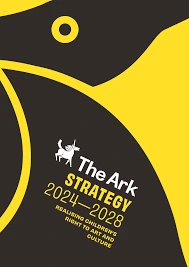
— The Ark Strategy 2024–2028
— The Ark Strategy 2024–2028
Over thirty years, thousands of children have passed through
The Ark
's programmes, and many have gone on to become animators themselves. In
The Ark Strategy 2024–2028
, children appear as "makers and collaborators, not just spectators".
Liberi Ludi
works to the same principle.
Cinéma, cent ans de jeunesse — Cinémathèque française and La Fémis (France)
A programme run by the
Cinémathèque française
and
La Fémis
: each academic year, schoolchildren from across France and from a dozen partner countries make a short film, with the involvement of working filmmakers, on a set theme (themes to date have included colour, the shot, the motif, the body, air). The finished works are presented at a closing screening in Paris. This is, of course, closer to cinema itself than to "playing at cinema", but it is precisely this structure of work with young authors that
Liberi Ludi
takes as its model: sustained professional company through the whole filming process, and the premiere screening as the conclusion of the work. We would not be offended if someone were to call our own approach "playing at the Cinémathèque": to keep such a bar as a horizon is, for us, both essential and binding.
Brickfilms.com
Brickfilms.com
is an independent online platform that emerged in Canada in the early 2000s and brought together stop-motion enthusiasts from across the world. Participants, from around the ages of 8–10, make short animated films using plastic construction toys and figures (primarily LEGO), and in doing so go through the full production cycle, from the idea to editing and sound.
Over the years, the platform has grown into a living community. It runs competitions (annual, monthly and themed) and operates as a moderated social space in which beginners learn from more experienced participants and peers exchange techniques and criticism in a safe setting. For many, this hobby has been a professional springboard: a number of the community's graduates now work in the animation industry.
The high point of the year remains the closing screening at
Le Champo cinema in Paris
, the moment when the work of a young author is shown in a legendary hall in front of a real audience.
In terms of creating a safe environment for young animators to talk to one another, with carefully judged professional moderation, the
Brickfilms.com
experience is, for
Liberi Ludi
, one of the most successful models at the meeting point between a pedagogy oriented towards the development of a child's creative agency and a well-judged use of contemporary technical means.
Creative Benchmarks
Aardman Animations Outreach (United Kingdom)
Aardman Animations Outreach
is the educational programme of
Aardman
, the studio behind
Wallace and Gromit
and
Shaun the Sheep
. The
Animate with Aardman
programme takes participants through the full production cycle of an animated film, from idea to sound, and since its launch has reached tens of thousands of schoolchildren across the United Kingdom. It stands as an example of how a major animation studio can take on responsibility for and contribute to formal education.
For
Liberi Ludi
, this reference works on two registers at once. Structurally, as a model of accompanying the child through every stage of making a film alongside professionals. And aesthetically, since
Aardman
is the world's benchmark for auteur stop-motion animation, in which the handmade, the material and the individuality of an authorial hand are not a technical limitation but the precondition of artistic expression.
Yuri Norstein and the Soviet School of Cut-out Animation and Graphic Design
Liberi Ludi
develops its own original content within the
Read, Cut & Film
method, drawing on professional book illustrators and animation artists to produce filming kits (stories, storyboards, backgrounds, characters and the rest). In the creative side of our work we hold to the principles that count as the gold standard of auteur animation: the combination of graphic clarity and authorial invention; the unmistakable feel of frame-by-frame animation alongside the full range of contemporary technical possibilities; a narrative manner and a narrative substance addressed to a child audience, while using artistic means to bring out the work's hidden subtext.
The world's recognised leader in auteur animation is the Soviet school of
cut-out animation
(
cut-out animation
), which brought together artists working across the various national republics.
In our own approach, we take both individual masterpieces and the work of particular authors as points of reference. First and foremost among them is
Yuri Norstein
, whose films
Hedgehog in the Fog
(1975) and
Tale of Tales
(1979) have repeatedly been named among the greatest animated films of all time.
Other major figures of this authorial school of animation, for us, include
Fyodor Khitruk
(
Boniface's Holiday
, 1965;
Winnie-the-Pooh
, 1969–1972), one of the reformers of Soviet animation, who established a tradition of graphic minimalism and authorial intonation;
Andrei Khrzhanovsky
(
The House That Jack Built
, 1976), who developed his own style of poetic, literature-oriented animation; and
David Cherkassky
(
Treasure Island
, 1988, and
The Adventures of Captain Vrungel
, 1976–1979), whose work brought together graphic precision and a deliberately grotesque cast of characters, spectacle and a recognisable authorial style.
The Reggio Emilia Approach in Work with Migrant Children
The
"Hundred Languages of Children"
approach of
Reggio Emilia
(the
Reggio Emilia approach
) has been adapted in a number of European programmes working with children from migrant and refugee families, in particular in Italy, Sweden and Germany.
Within municipal and educational projects,
pedagogical documentation
(
pedagogical documentation
) is used as a two-way channel of communication with families. Photographs, texts, display panels, videos and project reports help parents see the unfolding of their child's capacities through participation in shared activity, even before the family has a common language of communication with the school.
This connection between the pedagogical approach and the practice of integration shows that a child's participation in shared educational practices (the atelier, long-term projects, and collective creative work) remains possible even in the absence of a shared verbal language.
From the Reggio practice of work with migrant children,
Liberi Ludi
takes above all two tools:
pedagogical documentation
(
pedagogical documentation
) as a way of showing the process to parents and partners across the language barrier, and
open pedagogical planning
(
progettazione
) as a safeguard against the pressure for rapid, formalised outcomes.
Part III. Questions and Clarifications
Jerome Bruner, Vladimir Propp, Sheldon Cashdan. Story is treated as a form of making sense of experience: the child does not simply retell a plot, but interprets it and makes it part of their own inner world.
1. How does the method's claim to a "screen-free" approach sit alongside its final product, an animated film shot on a smartphone and distributed through a digital platform?
The answer turns on how the smartphone is defined. In Read, Cut & Film, it is used as a camera at the "Film + Edit" stage; for the rest of the time, the child is reading, talking through the story, and working with paper. This is in line with Sherry Turkle's argument: the problem is not the device itself, but whether it becomes an environment, a "black box" that generates both process and outcome, or stays a tool in the child's hand, extending what they can do. We hold to that principle: the device is a tool, not an environment (device as tool, not as environment).
2. The Reggio Emilia approach and the work of Jerome Bruner set out a language of constructivist, child-led learning (child-led learning). The practical work of Liberi Ludi, however, is built as a structured cycle, with prepared storyboards and pre-designed characters. In that sense, does the method belong more to a "scaffolded constructivism" (scaffolded constructivism) than to fully open creative work?
For children in a situation of migration, and within the format of short, two-hour sessions, structural support and a clearly drawn frame matter a great deal. Without them, a child who does not yet share the group's language or cultural context easily ends up outside the collaborative work. A more accurate description of the method is "creative work inside a pre-designed structure" (scaffolded creative making): the child retains the room to make their own artistic decisions, but does so inside a supportive pedagogical frame.
An approach of this kind, in which learning is built through structural support, is fully in line with Lev Vygotsky's idea of the Zone of Proximal Development (ZPD).
3. You say the method is designed for 8–12-year-olds, yet you cite, for instance, Reggio Emilia, which is an approach for children aged 3–6. So what age is the method actually aimed at?
The choice is driven by the psychological character of childhood between the ages of 8 and 12, the period defined in European pedagogy as middle grade or middle childhood. Jean Piaget described this period as the transition to the formal operational stage. Lev Vygotsky and Jerome Bruner pointed to the same age as the period of narrative work with identity: it is between 8 and 12 that the child is actively building an image of themselves through stories, their own and other people's.
Methodologically, Liberi Ludi draws on a set of principles that have proved themselves in neighbouring pedagogical traditions, and adapts them to the framework of middle childhood. From Reggio Emilia, originally developed for early years, the method takes the concept of the image of the competent child: the understanding that, in the learning process, the child is a subject and a co-author, not an object. It also draws on the principle of multimodal meaning-making, working with image, movement, word and sound at the same time, as equal elements of utterance. Of particular value is the Reggio Emilia experience of pedagogical support for migrant children and for children from vulnerable communities: visual and cinematic language becomes a tool of inclusion in settings where another verbal language has not yet become a reliable foothold for the child.
Within the 8–12 age range, all of these principles take on a new dimension: a greater narrative complexity, together with a capacity for reflection and conscious authorial choice, allows us to move with the child from the expression of immediate experience characteristic of early-years pedagogy towards the making of a full artistic statement.
4. "Sources of moral imagination for the middle grade child": is this not too contested a formulation in the current political context?
In progressive educational circles, the phrase "sources of moral imagination" can read as normatively conservative. The substantive position of the method is the following: classical narratives do not carry "the correct values"; they work with the dimension of value as such. (The understanding of narrative as an important form of moral and personal self-interpretation can be found in the work of the American psychologist and theorist of education Jerome Bruner, the Canadian philosopher and scholar of identity Charles Taylor, and the Scottish philosopher Alasdair MacIntyre.)
The same position can also be described as narrative work with values (narrative work with values) or as the development of moral imagination through stories (moral imagination through stories), which perhaps captures the method's relation to content more precisely.
Literature / Further Reading
Root 1. Play
- Johan Huizinga, Homo Ludens: A Study of the Play-Element in Culture. 1938. English translation by R. F. C. Hull, Routledge & Kegan Paul, 1949 (and subsequent editions, including Beacon Press, 1955).
- Jean Piaget, La formation du symbole chez l'enfant, 1945. English edition: Play, Dreams and Imitation in Childhood, trans. C. Gattegno and F. M. Hodgson, Routledge / Norton, 1951.
- Lev Vygotsky, Imagination and Creativity in Childhood, 1930. English translation by F. Smolucha, in Journal of Russian and East European Psychology, vol. 42, no. 1 (2004), pp. 7–97.
- Lev Vygotsky, Mind in Society: The Development of Higher Psychological Processes, ed. and trans. M. Cole, V. John-Steiner, S. Scribner and E. Souberman, Harvard University Press, 1978.
- Lev Vygotsky, Thinking and Speech, 1934, trans. N. Minick, in The Collected Works of L. S. Vygotsky, Vol. 1: Problems of General Psychology, Plenum, 1987.
Root 2. Knowledge through Action
- John Dewey, My Pedagogic Creed, E. L. Kellogg & Co., 1897.
- John Dewey, Art as Experience, Minton, Balch & Company, 1934.
- John Dewey, Experience and Education, Macmillan, 1938.
- Seymour Papert, Mindstorms: Children, Computers, and Powerful Ideas, Basic Books, 1980.
- Seymour Papert, "Situating Constructionism", in S. Papert and I. Harel (eds.), Constructionism, Ablex, 1991, ch. 1.
- Mitchel Resnick, Lifelong Kindergarten: Cultivating Creativity through Projects, Passion, Peers, and Play, MIT Press, 2017.
- Carolyn Edwards, Lella Gandini and George Forman (eds.), The Hundred Languages of Children: The Reggio Emilia Approach to Early Childhood Education, 3rd ed., Praeger, 2012.
Root 3. Narrative and Identity
- Jerome Bruner, Actual Minds, Possible Worlds, Harvard University Press, 1986.
- Jerome Bruner, Acts of Meaning, Harvard University Press, 1990.
- Vladimir Propp, Morphology of the Folktale, 1928. English edition: trans. Laurence Scott, 2nd ed. revised by Louis A. Wagner, University of Texas Press, 1968.
- Bruno Bettelheim, The Uses of Enchantment: The Meaning and Importance of Fairy Tales, Knopf, 1976.
- Sheldon Cashdan, The Witch Must Die: How Fairy Tales Shape Our Lives, Basic Books, 1999.
- Joseph Campbell, The Hero with a Thousand Faces, Pantheon, 1949.
- Martha Nussbaum, Cultivating Humanity: A Classical Defense of Reform in Liberal Education, Harvard University Press, 1997.
- Martha Nussbaum, Not for Profit: Why Democracy Needs the Humanities, Princeton University Press, 2010.
- Maxine Greene, Releasing the Imagination: Essays on Education, the Arts, and Social Change, Jossey-Bass, 1995.
- Charles Taylor, Sources of the Self: The Making of the Modern Identity, Harvard University Press, 1989.
- Alasdair MacIntyre, After Virtue: A Study in Moral Theory, University of Notre Dame Press, 1981.
Root 4. The Reggio Emilia Approach
- Loris Malaguzzi, I cento linguaggi del bambino (poem and texts), Reggio Children, 1996.
- Reggio Children, The Wonder of Learning: The Hundred Languages of Children (catalogue of the ongoing exhibition, editions from 2008).
- Reggio Children, Children's Rights and further publications in the series.
- Reggio Emilia Institutet (Stockholm), Reggio Network conference materials, 2016–2019, and publications on the adaptation of the Reggio approach for newly arrived children.
Root 5. Psychosocial Support
- Cathy Malchiodi, Handbook of Art Therapy, 2nd ed., Guilford Press, 2011.
- Inter-Agency Standing Committee (IASC), Guidelines on Mental Health and Psychosocial Support in Emergency Settings, 2007.
- IFRC Reference Centre for Psychosocial Support: operational handbooks and practical toolkits.
- Lucia Capacchione, The Creative Journal for Children: A Guide for Parents, Teachers and Counselors, Shambhala, 1989.
Root 6. Reducing Screen Time and Digital Wellbeing
- Jonathan Haidt, The Anxious Generation: How the Great Rewiring of Childhood Is Causing an Epidemic of Mental Illness, Penguin Press, 2024.
- Jean Twenge, iGen, Atria Books, 2017.
- Jean Twenge, Generations, Atria Books, 2023.
- Sherry Turkle, Reclaiming Conversation: The Power of Talk in a Digital Age, Penguin Press, 2015.
- AAP Council on Communications and Media, Media Use in School-Aged Children and Adolescents, American Academy of Pediatrics, 2016 (with subsequent updates).
- World Health Organization, Guidelines on Physical Activity, Sedentary Behaviour and Sleep for Children under 5 Years of Age, WHO, 2019.
- WHO Regional Office for Europe, Health Behaviour in School-aged Children (HBSC) and Childhood Obesity Surveillance Initiative (COSI), continuing studies.
- European Commission, Better Internet for Kids (BIK+) strategy.
- European Network of Ombudspersons for Children (ENOC), recommendations on children's digital wellbeing.
Branches: European and International Practices
- The Ark, Dublin, The Ark Strategy 2024–2028 and public materials of the organisation.
- Cinéma, cent ans de jeunesse: programme materials of the Cinémathèque française and La Fémis.
- Brickfilms.com: community and competition materials; closing screenings at Le Champo cinema, Paris.
- Aardman Animations Outreach, Animate with Aardman: programme materials and educational resources.
- United Nations, Convention on the Rights of the Child, 1989, Article 31.
- Yuri Norstein, Snow on the Grass, vols. 1–2, Krasnyi Parokhod, 2008 (recorded lectures and reflections of the master; in Russian).